
Christmas at the Vatican
Vatican Christmas celebration overview


Papal activities during Christmas time
In Vatican City during the Christmas season, the Pope actively participates in several liturgies and conveys his messages to the faithful around the world. These activities center around the celebration of Masses, sharing blessings and messages, and leading New Year's liturgies.
Christmas Eve and Day Masses
Papal Messages
The traditional Urbi et Orbi (“to the city and to the world”) message and blessing is a pivotal moment offered from the central loggia overlooking St. Peter’s Square. This blessing conveys wishes of peace and joy while also touching upon current global issues and emphasizing the need for unity and compassion in times of fear and pain.
New Year's Liturgies
Origin and significance of Christmas celebrations
Why is Christmas so important in the Vatican?
The earliest record of the Christmas celebration dates back to 336 AD in Rome, marking the beginning of a long-standing tradition within the Christian faith. This pivotal event is a recognition of Jesus Christ's birth, commonly referred to as the Nativity of Our Lord. Over time, this celebration spread throughout the Christian world, with St. Francis of Assisi introducing the first live manger in Greccio, Italy, in 1223, to foster a direct experience of the Holy birth.
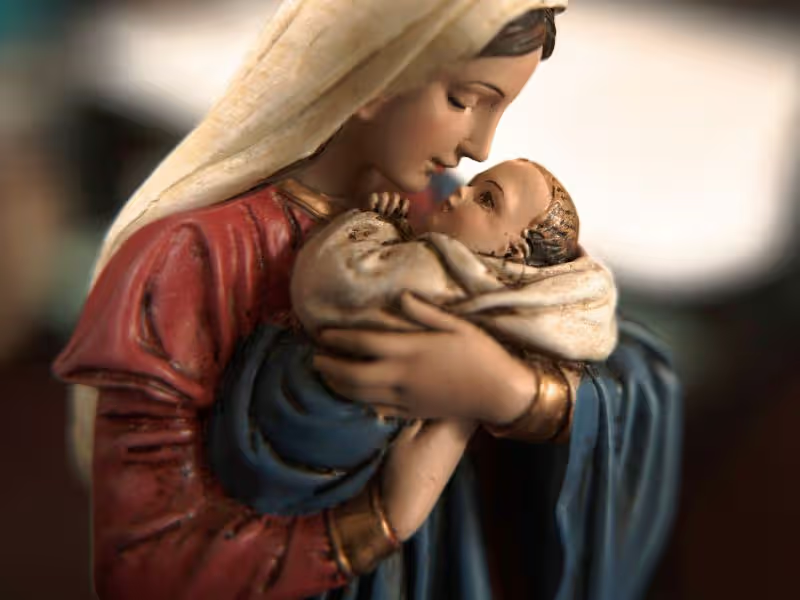
At the heart of the Nativity celebration is the theological significance of the birth of Jesus, whom Christians recognize as the Lord. This event symbolizes God's closeness to humanity, with the Virgin Mary's role as the mother of Jesus being central to the story. The Nativity encapsulates key theological concepts such as the incarnation, wherein the divine took human form, signaling the embodiment of hope and salvation for believers.
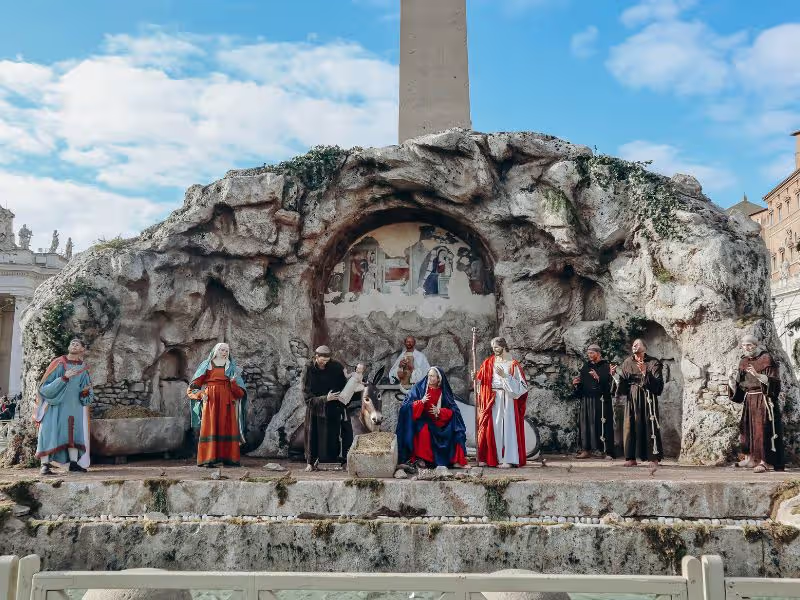
The Solemnity of the Nativity is both a liturgical highlight and a time for communal prayer and reflection. Many Christians around the world attend midnight Mass or services on Christmas Eve in honor of this solemnity. The Vatican's unveiling of the Nativity scene is a particularly significant custom, each year drawing on different historical or cultural aspects related to the Nativity story.
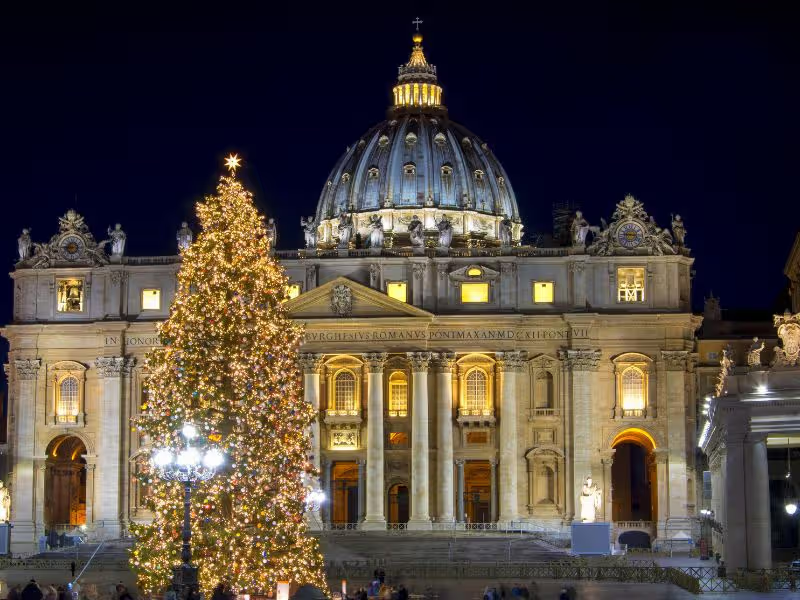
Vatican’s Christmas cultural elements
FAQs and tips
When does the Vatican typically unveil its Nativity scene?
The Nativity scene in Vatican City is traditionally revealed on December 9 and remains a central attraction throughout the Christmas season.
How can I obtain tickets to the Vatican Christmas Mass?
Tickets to attend the Christmas Mass at the Vatican are free and can be requested from the Prefecture of the Papal Household, but availability is limited and the demand is high.
What are unique Christmas traditions observed in Vatican City?
Vatican City observes unique Christmas traditions such as the unveiling of a detailed Nativity scene in St. Peter's Square and the Christmas Eve Mass, presided over by the Pope.
At what time does the Christmas Eve Mass start at St. Peter's Basilica?
The Christmas Eve Mass, also known as the Midnight Mass, at St. Peter's Basilica usually starts at 19:30, or 7:30 PM.
How has the Vatican Nativity scene been designed in recent years?
In recent years, the Vatican Nativity scene has incorporated different cultural and historical elements, often reflecting artistic styles unique to the regions from which they originate.
Where can I watch the Pope's Christmas Mass online?
The Pope's Christmas Mass can be watched online through the official Vatican live streaming services, as well as on various television networks that broadcast the event globally.