St. Peter’s Basilica

History and architecture of St. Peter’s Basilica

Early foundations and construction of St. Peter’s Basilica

The initial structure of the basilica was erected by Emperor Constantine in the 4th century. Positioned over what is believed to be the burial site of St. Peter, the first pope, this ancient edifice saw numerous modifications over time. It began as a monumental shrine to honor the apostle and housed an increasing number of pilgrims arriving in Rome to venerate the tomb.

Renaissance contributions to St. Peter’s Basilica

In the early 15th century, due to structural concerns over the Old St. Peter's Basilica, Pope Nicholas V envisioned a new church. This vision was brought to life by successive popes and architects such as Donato Bramante, who designed a novel central plan inspired by the Pantheon. Bramante's plan was embraced and expanded upon by other eminent Renaissance architects including Raphael and Antonio da Sangallo the Younger.

Evolution of the design of St. Peter’s Basilica

Michelangelo, taking charge of construction in 1547, maintained Bramante's original central plan while transforming the dome's design. After Michelangelo's passing, the project continued under the guidance of Giacomo della Porta and Domenico Fontana, finalizing the iconic dome. Later, under the direction of Carlo Maderno, the basilica shifted to adopt a Latin cross structure, extending the nave and defining its grandiose approach.

Art and sculptures at St. Peter’s Basilica

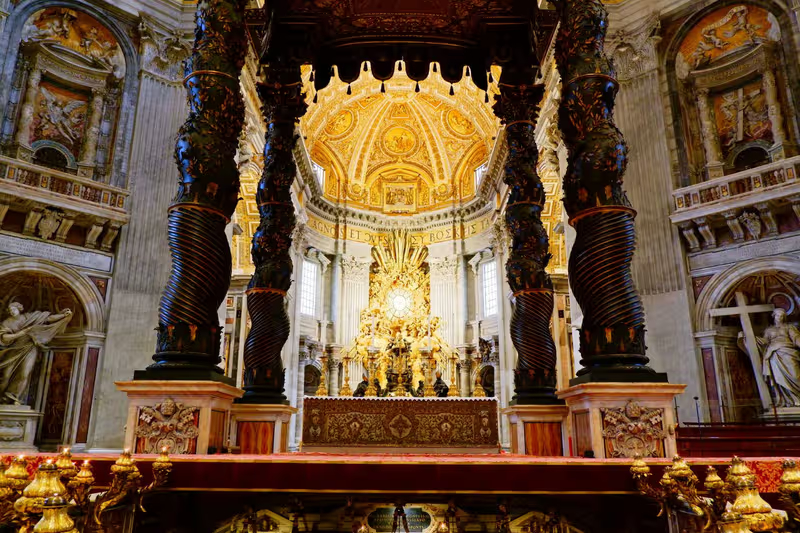
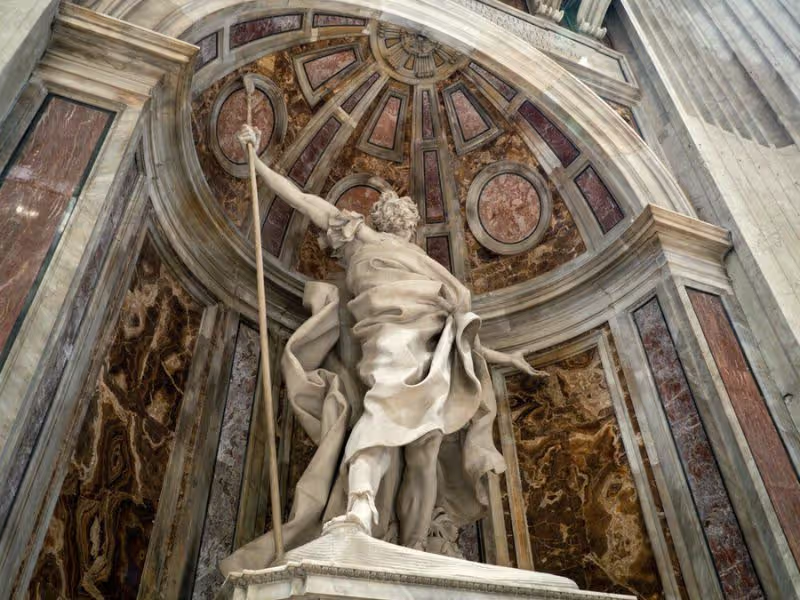
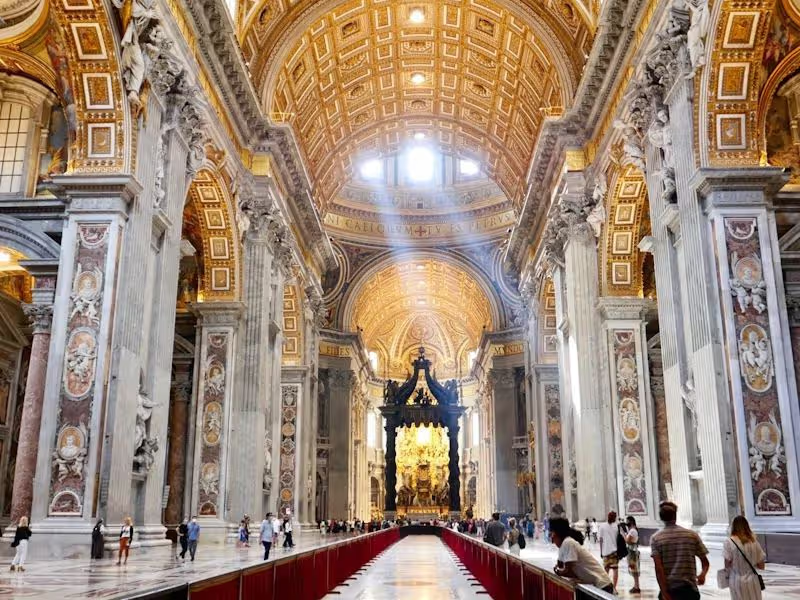
St. Peter's Basilica is adorned with works by some of the most renowned artists of High Renaissance and Baroque periods. Gian Lorenzo Bernini contributed significantly, crafting the Baldachin over the papal altar and the Cathedra Petri, an opulent throne enshrining St. Peter's chair. The basilica's interior is also embellished with a wealth of sculptures and mosaics, capturing religious narratives and the visages of saints.

Restoration and preservation of St. Peter’s Basilica

As a UNESCO World Heritage Site and a living place of worship, continuous efforts are made to restore and preserve St. Peter's Basilica. Restorations protect the fabric of the building and the art it houses from the wear of time and environmental elements. The Vatican oversees these activities, ensuring the site's historical and religious legacy endures for future generations.

Visiting St. Peter’s Basilica

The interior of St. Peter’s Basilica

St. Peter's Basilica vast interior houses numerous masterpieces of Renaissance art. At the core of the basilica lies the Baldachin, a magnificent high altar designed by Gian Lorenzo Bernini, situated directly above St. Peter’s tomb. Encircling the altar is the Cathedra Petri or "Throne of St. Peter", which symbolizes the unbroken line of the papacy. The experience of visiting St. Peter's Basilica is further augmented through the basilica's architecture and the significance of the main altar, beneath which lies the tomb of St. Peter, a poignant site for many. The key attractions inside the basilica are:

    • The main altar and the tomb of St. Peter
    • The Baldachin by Gian Lorenzo Bernini
The interior of St. Peter’s Basilica

Available Tickets

St. Peter's Basilica, Square & Papal Grottoes Guided Tour
  • Guided tour of St. Peter's Basilica, Square and Papal Grottoes
  • Live guide available in English, German, French, Italian, Portuguese or Spanish
  • Headset so that you can always hear your guide
★★★★½ 4.6 (390+ reviews) · Tiqets
St Peter's Basilica & Dome: Guided Tour
  • Entrance ticket to St. Peter's Basilica and Dome
  • Guided tour of St. Peter's Basilica
  • Live guide available in English, German, French, Italian, Portuguese or Spanish
  • Headset so that you can always hear your guide
★★★★½ 4.5 (650+ reviews) · GetYourGuide
St. Peter's Basilica, Dome & Papal Grottoes: Small-Group Tour
  • Entrance ticket to St. Peter's Basilica and Dome
  • Guided tour of St. Peter's Basilica and the Papal Grottoes
  • Live guide available in English, German, French, Italian, Portuguese or Spanish
  • Headset so that you can always hear your guide
★★★★½ 4.6 (620+ reviews) · Tiqets
Combo Guided Tour: Vatican Museums plus Sistine Chapel & St. Peter's Basilica
  • Skip-the-line entry to Vatican Museums & Sistine Chapel
  • Skip-the-line entry to St. Peter's Basilica
  • Live guide available in English, German, French, Italian, Spanish or Portuguese
  • Headset so that you can always hear your guide
★★★★☆ 4.3 (10.5k+ reviews) · Headout

The outstanding Dome of St. Peter’s Basilica
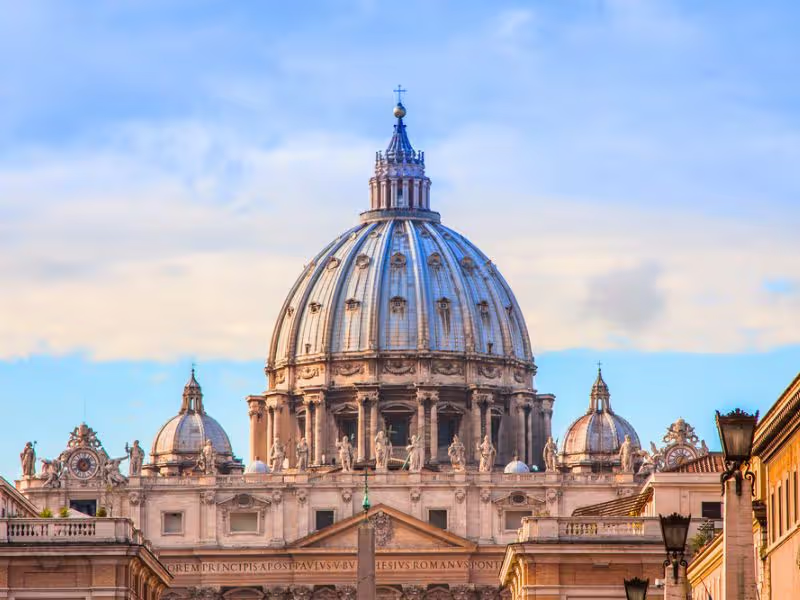
History of the dome of St. Peter's Basilica

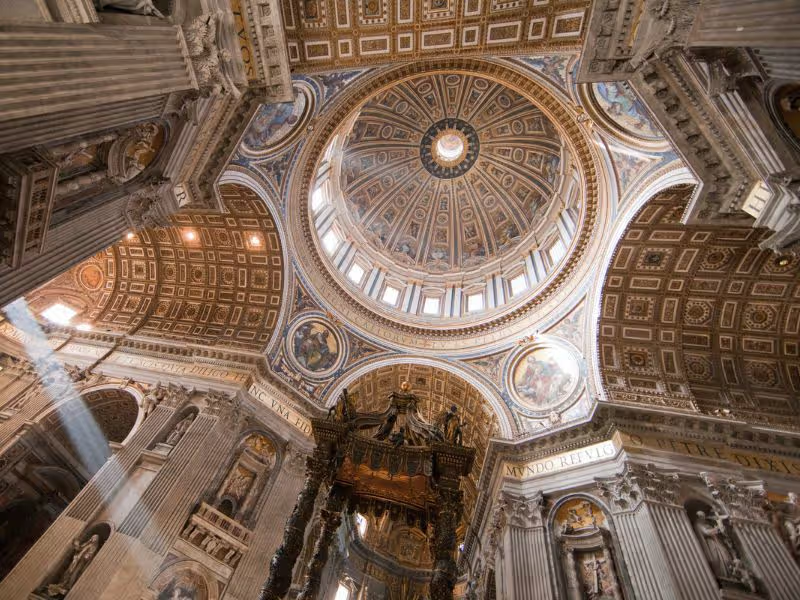
Michelangelo's design for St. Peter's Basilica's dome marked a Renaissance architectural triumph, blending Christian symbolism with human ingenuity. His innovative design, which was a departure from the original plans, introduced a complex, large-scale dome that was both a technical marvel and an artistic statement. After his death, Giacomo della Porta continued Michelangelo's work, modifying it to include a more pointed shape for enhanced stability, while honoring the original vision. Completed in 1590, the dome, standing at about 136 meters, remains a prominent feature of Rome's skyline, the dome symbolizes both the heavenly aspirations of the Catholic Church and the unparalleled heights of artistic and architectural endeavor.

Interior of the dome of St. Peter's Basilica

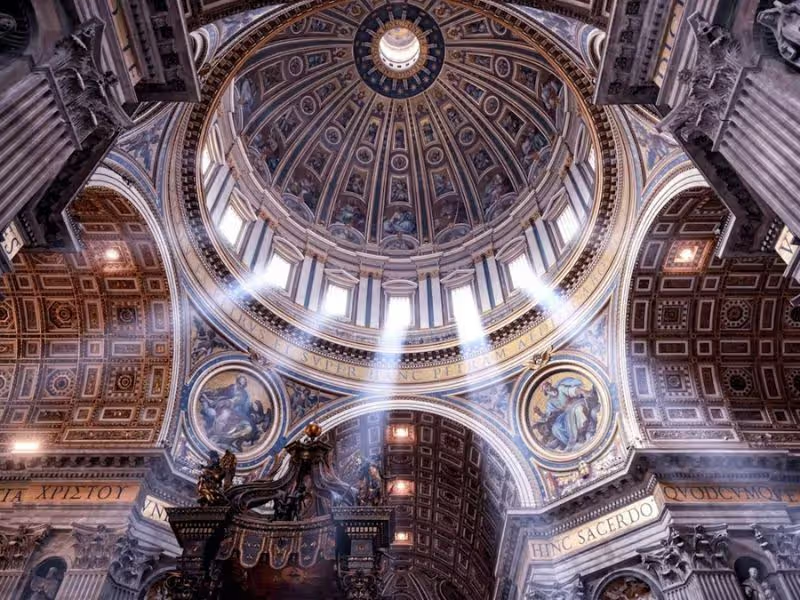
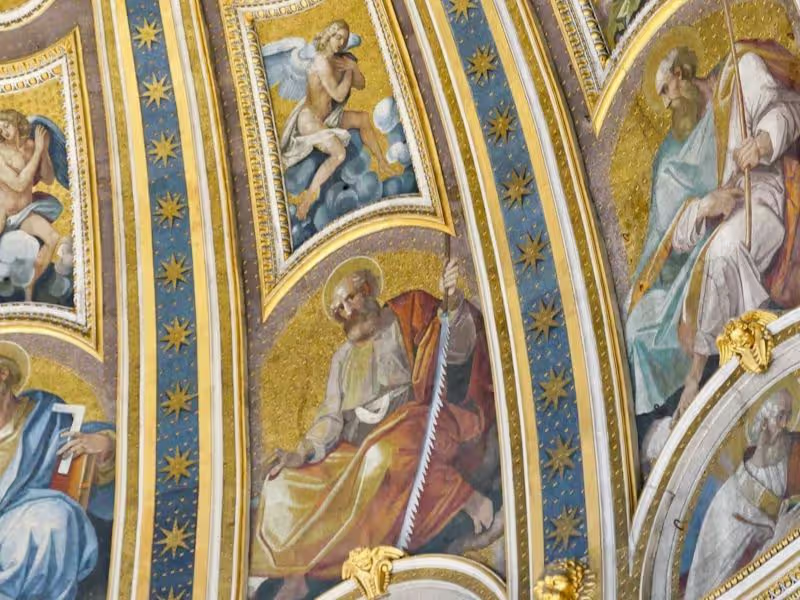
The interior of the St. Peter’s Basilica dome is adorned with intricate frescoes and stucco decorations that draw the eyes of visitors upward. The most prominent Latin inscription, visible from the floor of the basilica, is "You are Peter, and on this rock I will build my church, and I will give you the keys to the kingdom of heaven." This statement, attributed to Christ speaking to Saint Peter, underscores the spiritual authority of the Papacy and the Vatican's foundational role in the Christian world. The use of mosaics for these inscriptions, rather than painted frescoes, ensures their longevity. The dome’s oculus, a remarkable engineering feat, allows natural light into the basilica’s grand interior, creating an atmosphere of ethereal beauty.

Visiting the dome of St. Peter's Basilica

You can visit the dome with a separate ticket from the basilica entrance, which can be acquired on-site.

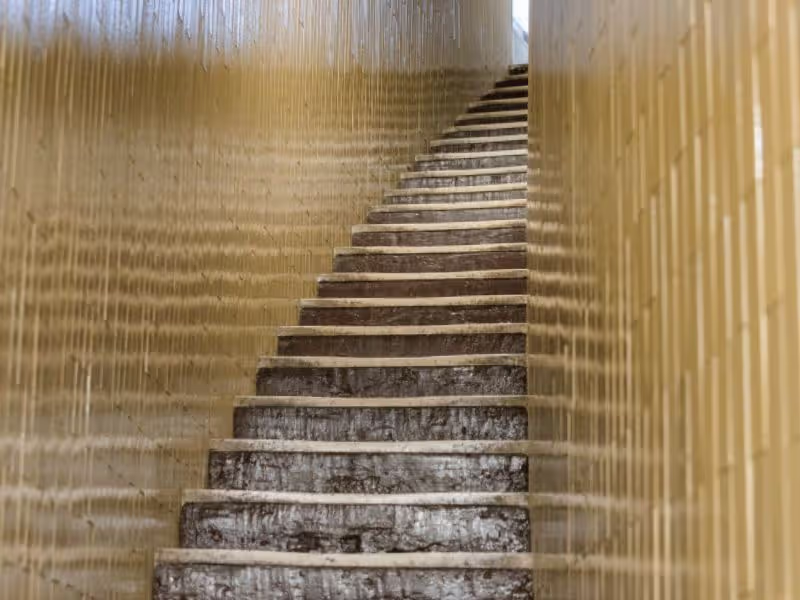
There are two options for reaching the top. The first involves taking an elevator to the roof level and then climbing 320 steps to the top. The second, less expensive option requires visitors to climb all 551 steps on foot. The stairway is narrow and can be quite strenuous, making it not easily accessible. The dome is exposed to the elements, so the experience can vary depending on the weather – on hot days, the climb can be particularly challenging, so carry water and wear sun protection and on rainy and windy days, the dome might be less crowded, offering a different experience.

Religious significance and functions of St. Peter's Basilica
The role of St. Peter’s Basilica in Catholicism

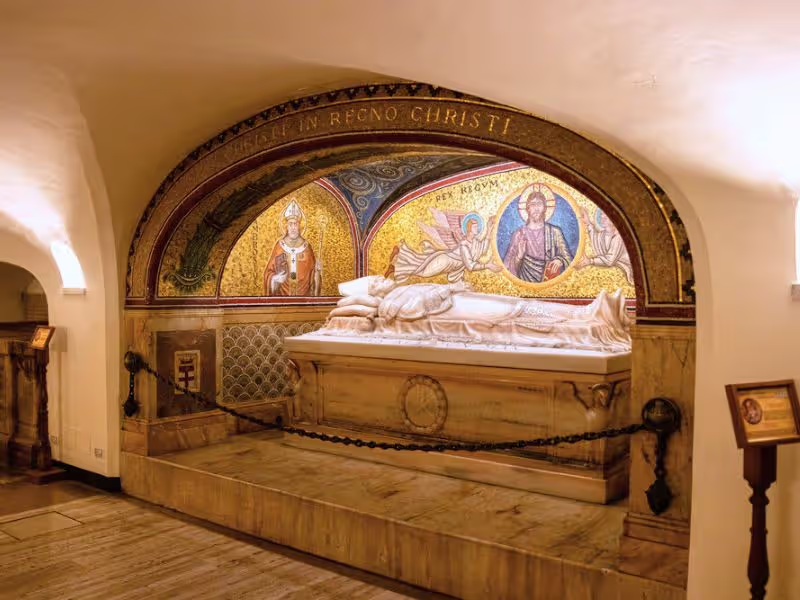
The Papal Basilica of Saint Peter is more than just an imposing edifice; it serves as a pivotal hub for the Catholic faith. Regarded as one of the holiest shrines and holding a unique position in the Christian world, the basilica is traditionally recognized as the burial site of St. Peter, one of the twelve apostles of Jesus and the first Pope. The tombs of past popes also reside within its walls, emphasizing its status as a monument to the continuity of the Catholic Church.

Often referred to as "the greatest of all churches of Christendom", its vast interior, which follows a Greek cross plan, has the capacity to accommodate thousands of worshippers during key religious services and ceremonies.

Notable events and liturgies at St. Peter’s Basilica

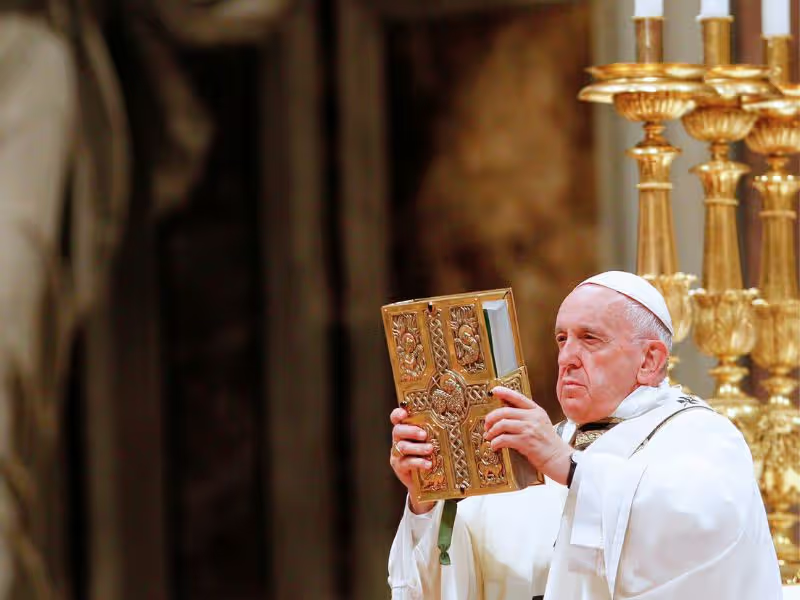
St. Peter's Basilica is the site of numerous significant liturgies throughout the year, drawing pilgrims from across the globe. The most prominent of these is the Easter and Christmas liturgies, presided over by the Pope and broadcast to millions worldwide. During these events, the Pope delivers messages and blessings from the central loggia of the basilica to the crowds gathered in St. Peter's Square.

The basilica is a place where new saints are proclaimed, and it has been the ceremonial venue of 21 Ecumenical Councils, significant gatherings that address matters of doctrine and church policy. It is the main church for the Vatican, imbued with deep spiritual and cultural importance.

Comparisons with other major basilicas

St. Peter's Basilica's grandeur and size, highlighted by its massive dome designed by Michelangelo, set it apart in architectural significance.

St. Peter's Basilica complements the lineage of the Pantheon in Rome – once a state temple and later consecrated as a Catholic church – with its own iconic and reinforced dome, designed by Michelangelo, which has become a defining feature of the Vatican City skyline.

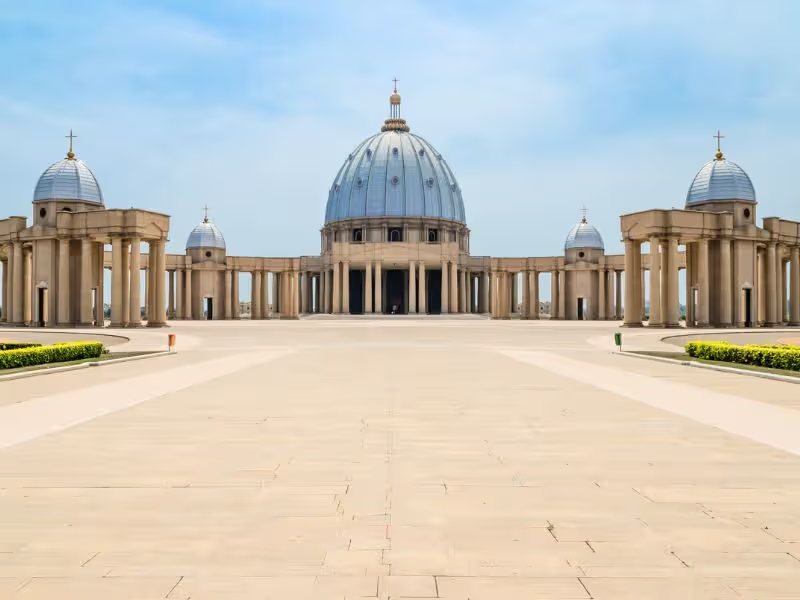
Its influence extends globally, notably to the Basilica of Our Lady of Peace in Yamoussoukro, which, while being the world's largest church by area, emulates St. Peter's architectural and artistic motifs. This connection shows widespread admiration and adaptation of the basilica's design – a blend of historical reverence and cultural hybridity.

St. Peter’s Basilica global influence

St. Peter’s Basilica’s influence echoes through countless Catholic churches around the world, many of which draw direct inspiration from its layout, aesthetics, and symbolism. The basilica is a testament to the profound global influence the Vatican City's state has exercised over centuries on both religious practices and architectural norms within Christianity.

Additionally, this major basilica's artistic merits, including its altars, paintings, and sculptures, reinforce Rome's reputation as an indelible center of art and culture. Its impact stretches beyond Catholicism and resonates within multiple facets of modern culture and history. In recognition of its significance, St. Peter's Basilica has been designed as a UNESCO World Heritage site, cementing its role as a beacon of artistic and religious gravity for the city of Rome and the Catholic Church.

Available Tickets

St. Peter’s Basilica Dome Guided Tour
Dome guided tour
St. Peter’s Basilica Dome Guided Tour
  • Entrance ticket to St.Peter’s Basilica and Dome
  • Expert live guide available in English, Spanish, French, German or Italian
★★★★☆ 4.3 (2.0k+ reviews) · Headout
from€32
Book Now

FAQs and tips

How do I get tickets to visit St. Peter's Basilica?

To visit St. Peter's Basilica itself, you do not need tickets as entrance is free. However, if you wish to avoid long lines, there is the option to book a guided tour which generally includes dedicated entrance times.

Is it free to visit St. Peter’s Basilica?

Yes, it is free to visit St. Peter's Basilica. However, if you want to visit the Vatican Grottoes underneath the basilica or climb up to the dome for a panoramic view of Rome, there is a fee involved for those specific attractions.

Can I skip the line at St. Peter’s Basilica?

Yes, you can skip the line at St. Peter's Basilica by booking a guided tour or purchasing a skip-the-line ticket through a reputable tour operator or the official Vatican ticket office.

Can I take pictures inside St. Peter's Basilica?

Photography is allowed inside St. Peter’s Basilica, but the use of flash is often prohibited. Be prepared to capture some breathtaking views of Rome and the interior of the basilica from the dome’s vantage points.

What should I wear to visit St. Peter's Basilica?

St. Peter's Basilica has a strict dress code that also applies when visiting the dome. Shoulders and knees must be covered, and hats should not be worn inside. Ensure you dress appropriately, or you may be denied entry.

Who were the architects involved in the design of St. Peter's Basilica?

St. Peter's Basilica was conceived by multiple master architects, including Donato Bramante, Michelangelo, Carlo Maderno, and Gian Lorenzo Bernini. Their collective genius shaped the architectural and artistic heritage of this landmark.

What are some of the defining elements of St. Peter's Basilica's interior?

The Basilica's interior is known for its grandeur, including Michelangelo's Pietà, the 29-meter-high Baldacchino over the papal altar, and the vast, ornate nave. The richness of the mosaics and the statuary are also integral to its splendor.

What’s the historical significance of St. Peter's Basilica?

As the traditional burial site of St. Peter, one of Jesus' twelve apostles, and a cornerstone of the Catholic Church, St. Peter's Basilica holds immense religious and cultural importance. It has been a site of pilgrimage and worship for centuries.

What distinguishes St. Peter's Basilica's dome from others?

Michelangelo designed the dome of St. Peter's Basilica, inspired by the Pantheon's dome in Rome. It stands out due to its impressive diameter and height, making it a dominant feature of the Roman skyline.

How does the Vatican relate to St. Peter's Basilica?

The Vatican, the smallest independent state in the world, is home to St. Peter's Basilica. The Basilica is situated in Vatican City and serves as a principal place of religious activity for the Pope and a site for major liturgical celebrations.