
The Vatican City
Vatican City's History
Vatican City’s Cultural Contributions
Artistic, Architectural and Cultural influences
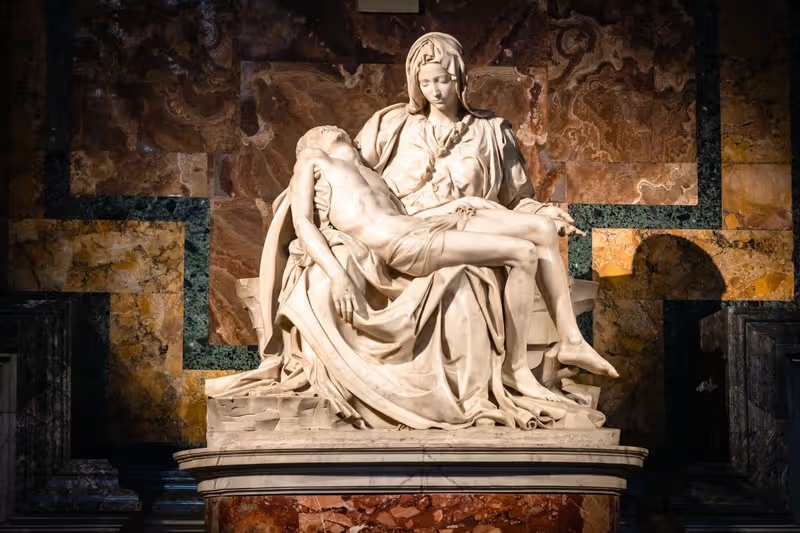
The Vatican City holds immense cultural significance due to its deep religious roots and its extraordinary collection of art and architecture. Renowned for its Renaissance masterpieces, Vatican City is home to some of the most acclaimed works by artists such as Michelangelo, Raphael, and Botticelli.
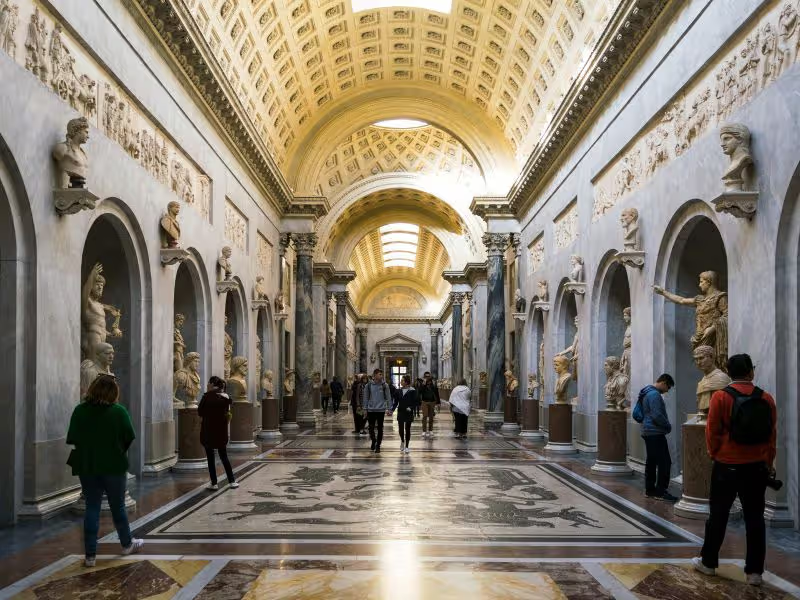
In the Vatican Museums, visitors can also immerse themselves in the splendor of the Sistine Chapel, adorned with Michelangelo's iconic ceiling frescoes. Raphael's Rooms display stunning frescoes by the artist and his workshop, while the Borgia Apartment reveals the delicate works of Pinturicchio.
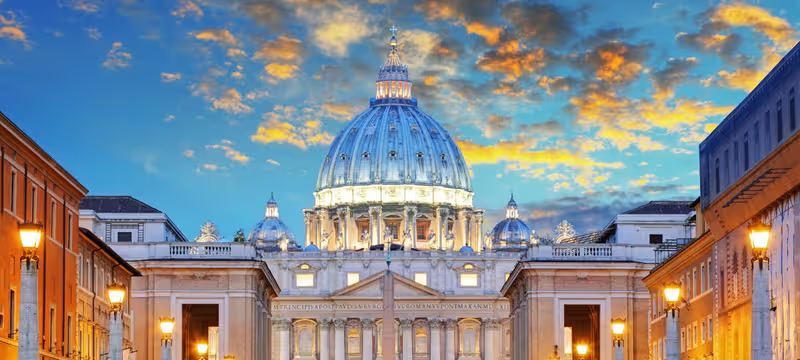
St. Peter's Basilica showcases architectural prowess with contributions from Bramante, Michelangelo, and Bernini, and is an architectural marvel detailed in guides about its history. The Vatican's surroundings are equally captivating, with the Vatican Gardens offering a serene escape within this bustling enclave, reflecting both natural beauty and human ingenuity. The Vatican Apostolic Library is world famous for holding priceless manuscripts and codices, and its contents often spark as much intrigue as the mysteries within the Vatican Secret Archives.
As a recognized UNESCO World Heritage Site, Vatican City garners further acclaim for its cultural and historical significance, preserving works that have both shaped and been shaped by the course of Western civilization.
Available Tickets
- Skip the line access
- Optional audio-guide for an extra cost available in English, French, Italian, Portuguese, Spanish, Russian, Japanese, German, Chinese and Korean
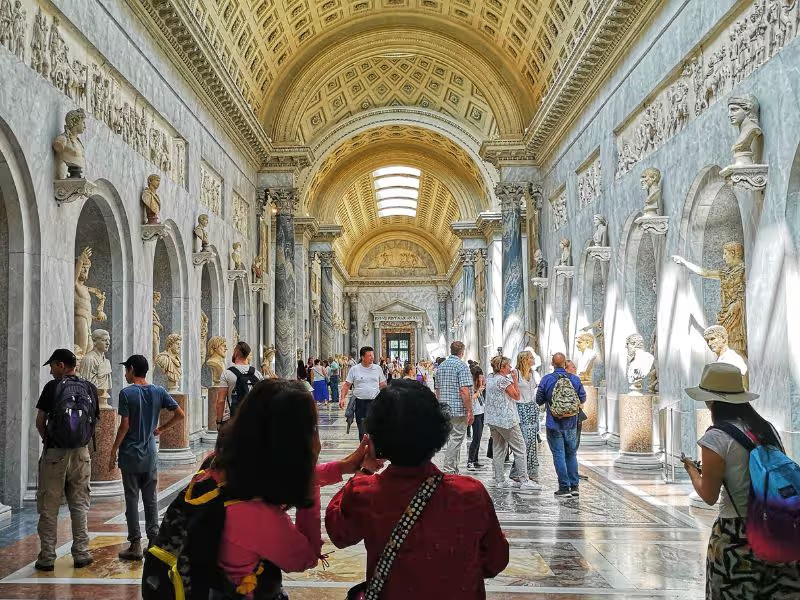
- English–speaking tour guide
- Skip the line admission to the Vatican Museums & Sistine Chapel
- Free cancellation
- Minibus tour
- Vatican Gardens audio guide
- Vatican Museums entrance ticket
- Free cancellation
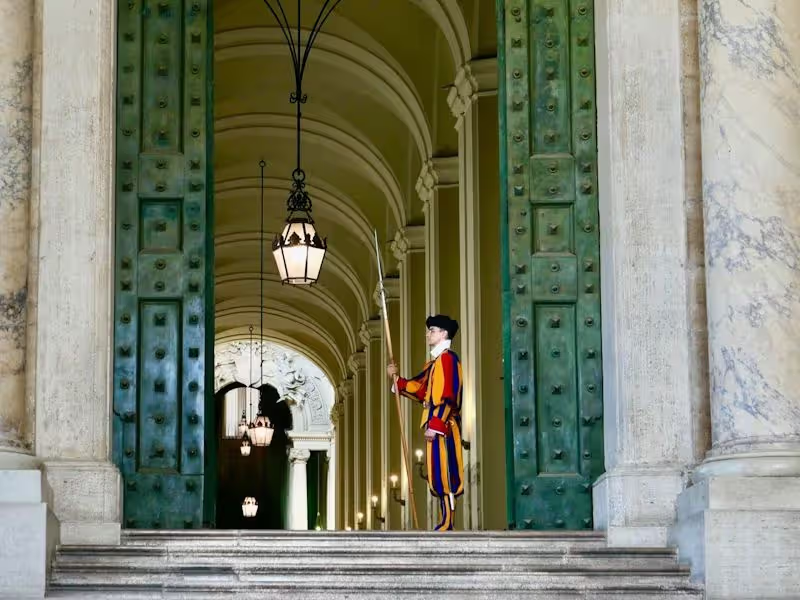
- Guided tour of St. Peter's Basilica, Square and Papal Grottoes
- Live guide available in English, German, French, Italian, Portuguese or Spanish
- Headset so that you can always hear your guide
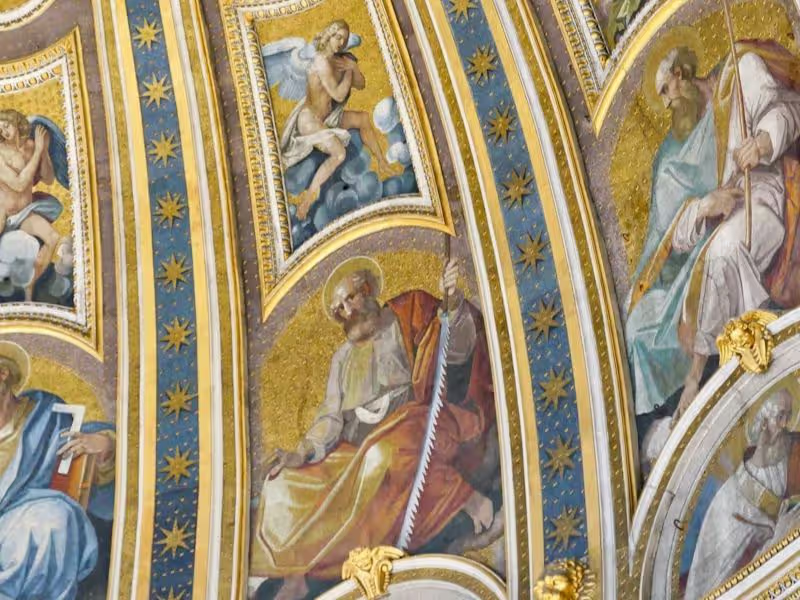
- Entrance ticket to St. Peter's Basilica and Dome
- Guided tour of St. Peter's Basilica
- Live guide available in English, German, French, Italian, Portuguese or Spanish
- Headset so that you can always hear your guide
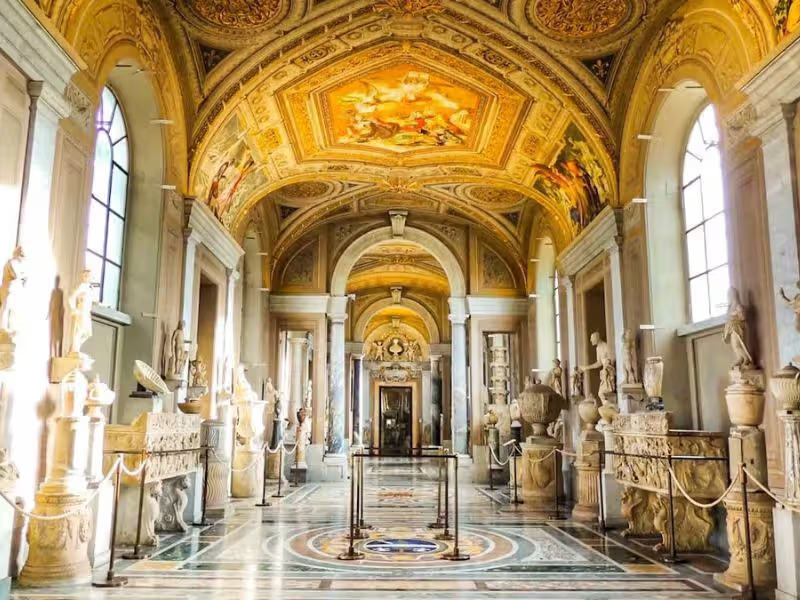
- Skip-the-line entry to Vatican Museums & Sistine Chapel
- Skip-the-line entry to St. Peter's Basilica
- Live guide available in English, German, French, Italian, Spanish or Portuguese
- Headset so that you can always hear your guide
Governance and Economic Aspects of the Vatican


Vatican City's Daily Life and Population
Vatican City, as an epicenter of religious and cultural activity, maintains a unique daily rhythm influenced by its residents and administration.
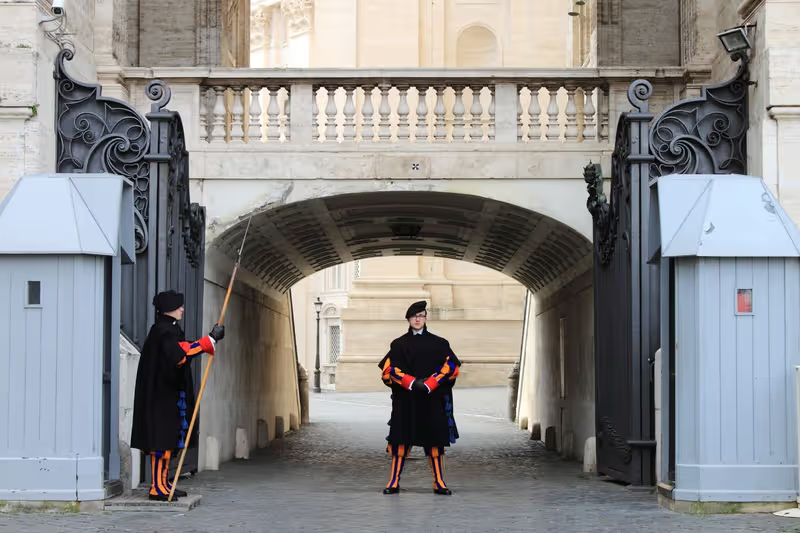
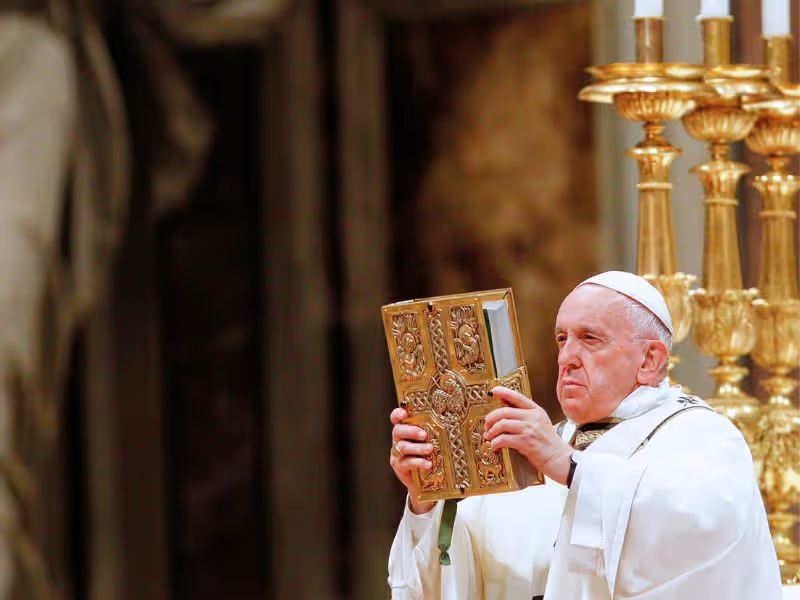
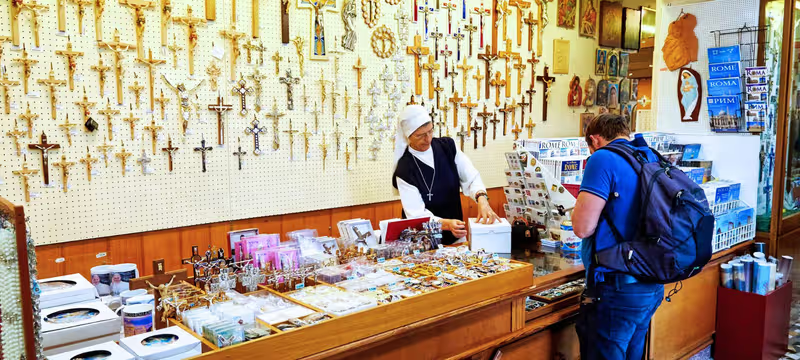
The sovereign city-state is not only the smallest country in the world by area but also by population. The population of Vatican City is remarkably small, with estimates around 500 individuals in 2024, a number in steady decline since the 60s, but estimated to double during the next half century. Among these are the Swiss Guard, a unit of Swiss soldiers responsible for the safety of the Pope, safeguarding the Pope and the Apostolic Palace. The Vatican's population comprises clergy, laypersons, and officials, most of whom are Italian by nationality. Citizenship in Vatican City is typically granted to those who reside there for their official duties, and it is commonly temporary.
Vatican City's populace converse predominantly in Italian, though due to its global religious significance, Latin and French are also used in official documents and communications. Despite its diminutive size, Vatican City boasts a wealth of civic amenities. It operates its own media outlets, including the influential daily newspaper 'L'Osservatore Romano', which has a notable impact within and beyond the city's boundaries. There is also a radio station that broadcasts worldwide.
Vatican's Global Presence
Diplomacy and International Relations
Vatican City maintains diplomatic relationships with countries around the world, facilitated by the Holy See— the central governing body of the Roman Catholic Church. The Pope, as the head of the Vatican City State and the Holy See, is a pivotal figure in international relations, emphasizing the city-state's religious and moral perspectives on global issues. Vatican diplomacy is marked by its historical ties and the Lateran Treaty of 1929, which established the independence of Vatican City from Italy, allowing it to conduct its own diplomatic affairs. Diplomatic relations are active with nations on every continent, underscoring Vatican City's reach and presence on the global map.
FAQs and tips
What is the Vatican City?
Vatican City is a sovereign city-state and enclave in Rome, recognized as the smallest country in the world both by area and population, serving as the headquarters of the Roman Catholic Church.
Is the Vatican a city or a country?
Vatican City is both a city and a country, officially termed the Vatican City State, operating as an independent country with its own governance and representation in international organizations, while also being a city encompassed by Rome.
What is Vatican City known for?
Vatican City is renowned as the spiritual and administrative center of the Roman Catholic Church, home to iconic monuments such as St. Peter's Basilica and the Sistine Chapel, celebrated for Michelangelo's frescoes.
Why is Vatican City considered an independent state?
Vatican City is considered an independent state due to the Lateran Treaty signed in 1929 with Italy, which recognized its sovereignty and established its autonomy as a distinct entity within Rome.
What is the population of Vatican City?
The population of Vatican City is approximately 500, making it the sovereign state with the smallest population in the world.
Who resides inside Vatican City?
The residents of Vatican City are primarily clergy of the Catholic Church, including nuns, priests, cardinals, and the Pope, along with a limited number of lay personnel who serve in various administrative capacities.
How does Vatican City differ from Rome?
Vatican City differs from Rome as it is a sovereign microstate that functions independently with its own set of laws and governance, separate from the Italian capital in which it is geographically located.
What currency is used in Vatican City?
Vatican City utilizes the Euro as its official currency, owing to an agreement with Italy and its membership in the Eurozone.
Vatican City, officially known as the State of the Vatican City (Stato della Città del Vaticano in Italian), is a sovereign nation-state, located entirely within the city of Rome, Italy. It holds the distinction of being the smallest independent nation-state in the world, both in terms of area and population.
- Area: Approximately 44 hectares (110 acres)
- Population: 525 people in 2024
- Government: Absolute elective monarchy
- Official Language: Italian
- Currency: Euro (€) since 2002